In the Fog of Ghosts, How to Prove You’re the Real Deal
Based on the experiences of students who have successfully navigated the system and guidance from faculty, here are some approaches to help students get the classes they need
By Abby Sigler and Tom Whitehead
In the battle for limited class seats this semester, showing up can make all the difference. When Gauri Santhosh arrived for the first day of class despite seeing a full waitlist, she took a chance that paid off. "Ghost students made it uncertain if classes were actually full, so I just showed up to class and it worked out for me," Santhosh said.
Her partner wasn't as fortunate. Despite using the same strategy for an Intermediate Fiction Writing class, the seats were legitimately filled with real students.
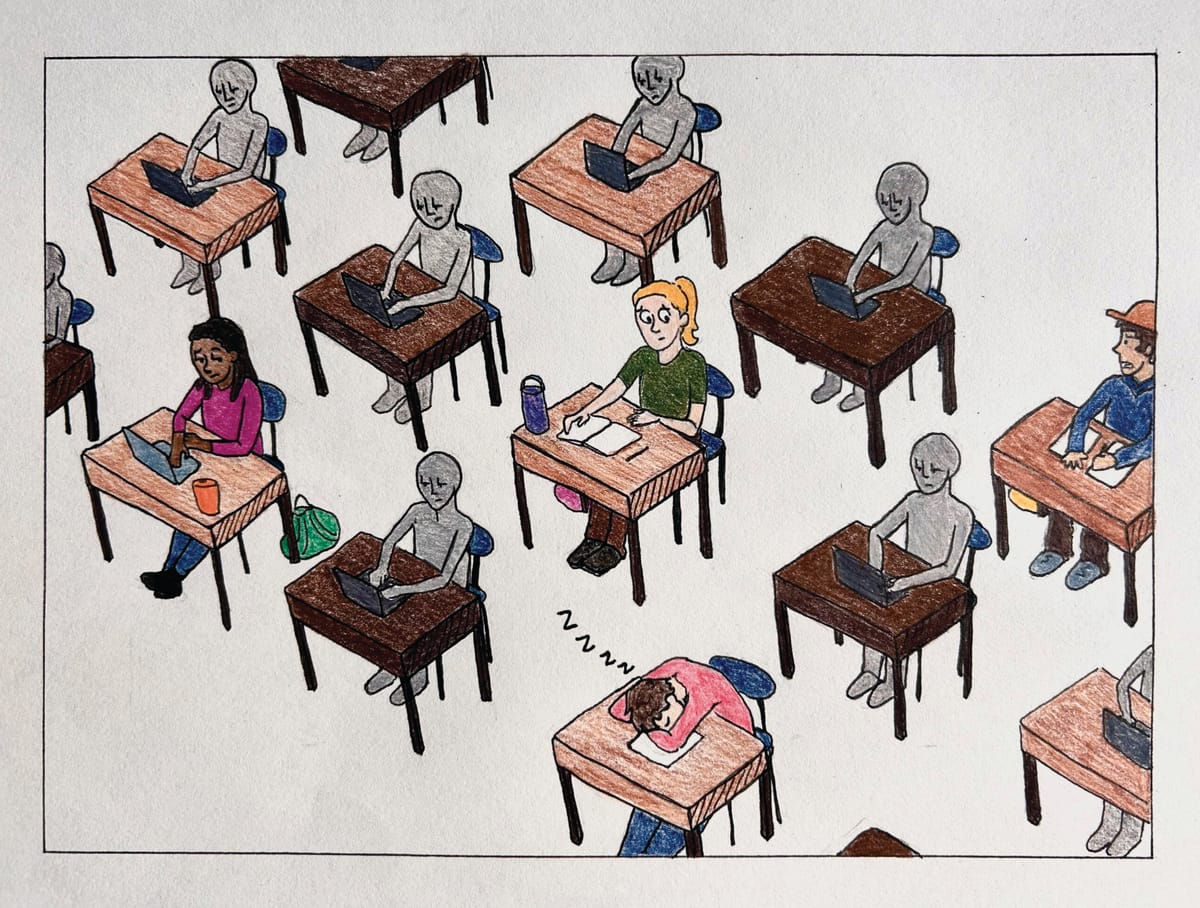
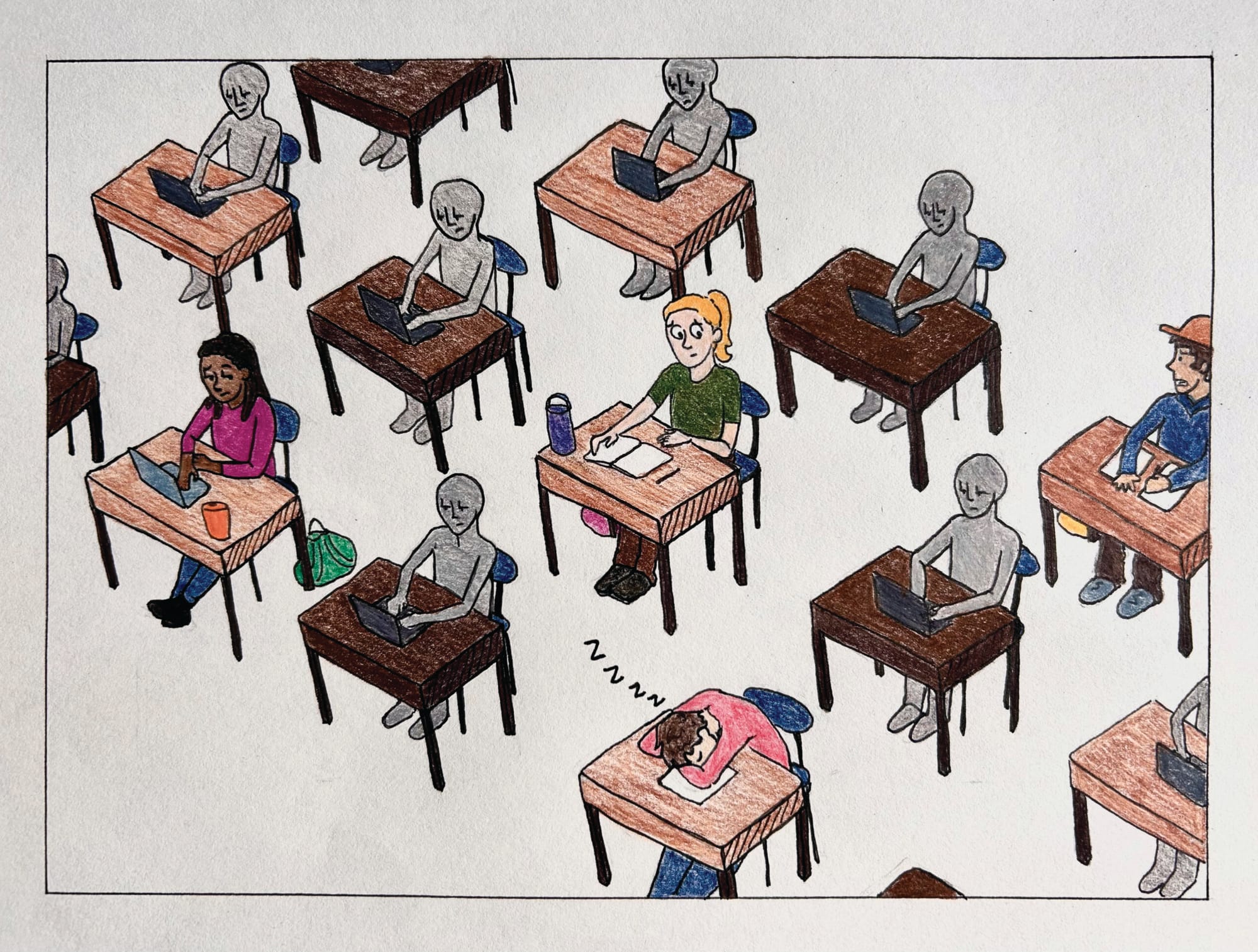
This practice has become standard for City College students facing an unprecedented wave of fraudulent registrations, leaving them unsure whether "full" truly means full.
Faculty have implemented various strategies to distinguish real students from ghosts. Nico HaBa experienced this firsthand in upper-level online writing courses. "Professors gave discussion question assignments in the first couple of weeks to prove you're a real student," HaBa explained.
He also observed a significant shift in class size. "Looking at the class list, it went from 60 to 20, and it could just be because the classes are hard, but you're wondering, 'where did everyone go?'" HaBa added.
These “proof of life” assignments have become increasingly common as faculty try to distinguish between real students and potential fraudulent accounts. Despite these efforts, a particularly troubling dimension has emerged in online classrooms: some ghost accounts submit AI-generated work and participate minimally, not for educational purposes but to maintain their enrollment status long enough to receive financial aid.
Computer Networking and IT instructor Maura Devlin-Clancy has observed these patterns. "In discussion posts, there is almost identical wording," she explained. "Even this semester, there were several instances of recognizing a kind of template."
These accounts create an unsettling classroom dynamic, where faculty and legitimate students must interact with participants who seem real but aren't genuinely engaged in learning. Some faculty have reported receiving AI-generated videos or images as assignment submissions.
"They sort of string you along," Devlin-Clancy noted. This behavior affects real students in discussion-based courses, where authentic academic exchanges are disrupted by strange posts appearing "in the middle of the night."
Unlike completely inactive ghost accounts, these participants exist in a liminal space — technically present, submitting work that appears legitimate at first glance, but fundamentally absent from the actual educational process.
Angelica Castro approached spring registration with a methodical strategy. "I heard about the ghost student issue back in the fall, so going into spring, I had a plan B, plan C," she said. The approach worked, but required patience: "It was a waiting game, but I ended up getting the classes I wanted right before the first day."
Castro's experience highlights the new reality for students who must develop multiple contingency plans for each requirement while faculty face the uncomfortable task of policing their rosters. In the registration system, ghost students often share similar ID number patterns or use all-caps in their last names.
Early assignments have become de facto identity checks rather than educational experiences. "With this ghost student issue, there is a big push to drop them, because they don't exist," Devlin-Clancy explained. "All they're doing is taking up a seat."
This creates tension between the college's traditional inclusive approach and the need to clear roster space for legitimate students.
Based on the experiences of students who have successfully navigated the system and guidance from faculty, here are some approaches to help students get the classes they need:
For In-Person Classes: Show Up
Political Science Professor Megan Sweeney offers clear advice: "If it is an in-person class that is full, the student should attend the first day of class at the start of the semester." Showing up in person remains one of the most effective strategies, as instructors can immediately identify you as a real student and may add you once they've cleared ghost accounts from their roster.
For Online Classes: Send an Email
"For online classes, students should submit a request to add and then email the instructor and express a desire to add," advises Sweeney. When emailing instructors, be specific about why you need the course and respond promptly to any verification requests they may have. This helps distinguish your communications from automated messages or scammers.
Visit Admissions & Records for Personalized Help
Students struggling with registration issues have another valuable resource: the Admissions & Records Office. Ghost students have added an additional burden, but their office is dedicated to providing students with personalized guidance to help them enroll in the classes they need.
Create Multiple Backup Plans
Following Castro's example, prepare backup plans for each required course. Consider alternative courses that fulfill the same requirements or different sections of the same course that may have fewer ghost registrations.
Don't Give Up on Wait Lists
Some class sections will open up right before the semester begins or in the first few weeks, as faculty purge ghost students from their rosters. If at first it appears that a class is full, be sure to check back later to see if more spots become available.
Beyond registration challenges, ghost students and their occasional AI-generated participation have fundamentally altered the classroom dynamic. Faculty are now caught between their desire to be accommodating and their need to identify fraudulent accounts.
"It's hard to put that hat on, while you also have this hat of being suspicious of students who don't exist," Devlin-Clancy said. "I want my classes to be inclusive, and I want everybody to feel included."
For students, this means navigating not only the registration process but also a transformed educational environment where proving you're real has become part of the curriculum.