City DREAM Organizes, Educates and Persists Amidst Lack of “Sanctuary” Clarity
Constituents across multiple organizations continue to navigate the fear and confusion of the threats to undocumented students.
By Kyra Young
Constituents across multiple organizations continue to navigate the fear and confusion of the threats to undocumented students
On the morning of Tuesday, March 4, Interim Chancellor Mitch Bailey sent out a memo to City DREAM Manager Maria Rodriguez before it was approved for circulation. The memo was a two-page advisory on how to respond if approached by immigration enforcement officials at City College, with a condemnation of the “direct attacks on our undocumented, queer and trans community and female/femme-presenting and identified people.”
It also indicated the Chancellor as the only authorized individual to accept warrants, legal documents and court orders from any immigration officers.
This document comes two weeks after the first meeting of an advisory group around undocumented and LGBTQ+ student protections as advised by a resolution the Board of Trustees passed in January.
“I’m hoping [the advisory group] can grow into having a deeper conversation about ways the institution can really provide support for the various areas of the college,” said Rodriguez. “It’s not just one area that needs guidance and support right now, it’s all across the college, and this can really centralize that support and get us to think of ways we can collaborate with one another.”
From Allyship into Action
Later on March 4, members of City DREAM and the Immigration Institute of the Bay Area hosted a two-part UndocuAlly training alongside a number of other workshops as part of the college’s scheduled professional development day.
The training, “Moving From Allyship Into Action,” was designed to raise awareness of the complex, day-to-day experiences of undocumented students. The second session specifically served as a know-your-rights crash course, facilitated by Veronica Guinto, a senior attorney with the IIBA working with students from City College.
Faculty in attendance were educated on the distinction between public and private spaces and what is meant by a “sanctuary” status, as well as how to protect themselves and their rights during interactions with law enforcement and immigration officials.
Steven Mayer, co-coordinator of the Puente program at Mission Campus, believes it's fundamental for faculty to learn their rights, and ensure those rights are known by their students. “They need to understand what to do if ICE comes onto campus, and how to protect their students as best as possible.”
The Puente Project is a national award-winning program that aims to improve the college attendance rate of California’s educationally underrepresented students. Mayers works consistently alongside students who could use more support, but don’t have access to the traditional support systems other students may be able to utilize.
“We work very closely with City DREAM, and City DREAM has become a really valuable source of stability in the lives of many of our students with Puente,” said Mayer. “It’s important to understand what our immigrant students are facing and listen to their stories. Most faculty I know at City College really get to know their students and establish good relationships with them.”
Mayer was one of several faculty members who attended the UndocuAlly training, where numerous questions were raised regarding City College’s sanctuary status.
Sanctuary College
Both the city of San Francisco and City College have adopted sanctuary ordinances – the city passed its “City and County of Refuge” ordinance in 1989, and the college adopted its own in September of 2017. However many are left to question what the “sanctuary” label can and cannot do for its residents.
“There is a misconception about the scope of what it means to attend a sanctuary campus or what living in a sanctuary city means,” explained Veronica Guinto, a senior attorney with the Immigration Institute of the Bay Area working with students from City College. “The term 'sanctuary' refers to the fact that the school or municipality has enacted laws or policies such that it will not use the city or school's resources to assist or aid in federal immigration enforcement, unless required to do so by law, such as a judicial warrant.”
Because City College is a public institution with an open campus, the sanctuary status cannot protect undocumented students from ICE officials coming onto campus. Public spaces on a campus could be front offices or lobbies, bathrooms, hallways, or open green spaces such as a campus quad. However, spaces like classrooms and offices are considered private spaces that would require a proper warrant to enter.
“Your classroom is considered a private space in the way that not just anyone from the general public could be present while you’re teaching,” explained Guinto. “If you have the restriction that someone has to be a registered student, or have a student ID, or some sort of permission from somebody to audit the class, it means the area for your general classroom would be considered a private space.”
Guinto also emphasized the importance of verbally asserting one’s rights in an incident where intimidation or force may be used against them, such as maintaining the protections of a private space.
The training addressed a number of other concerns raised by faculty, such as how to visibly demonstrate allyship, private versus public areas, what a judicial warrant looks like and whether officers could be armed.
“Ideally, it would be nice if there was more interest in the education of how to respond to law enforcement – or if they’re on campus, how faculty can protect their students,” said Guinto, reflecting on the workshop.
“Staff having the education is great, but more visibility is also important,” Guinto continued. “That visual communication of allyship, like a pride flag or a butterfly, maybe those should be in every classroom or every hallway. It communicates who we’re allies with.”
Another know-your-rights training in collaboration with City College Labor Studies, The IIBA, City DREAM and the San Francisco Labor Council will be hosted at City College’s Mission Center on Saturday, March 15 from 10 a.m. – 4p.m. This event is open to the public.
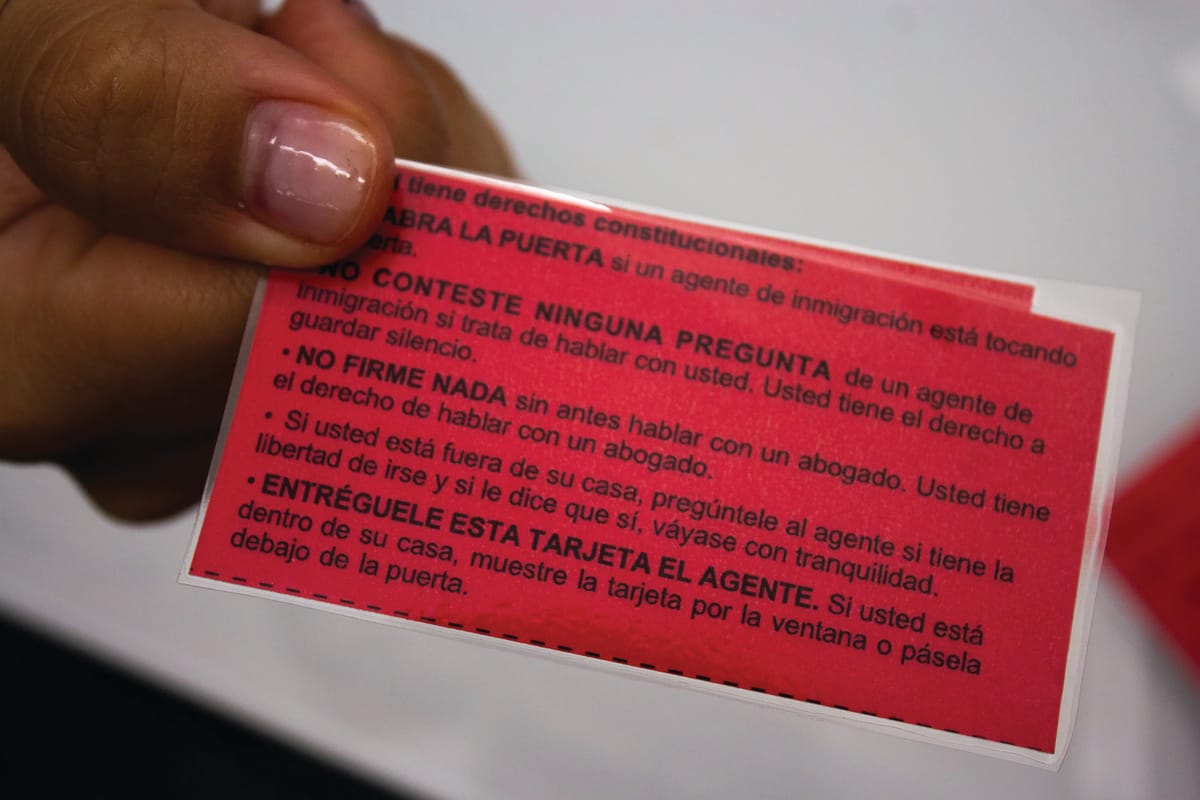
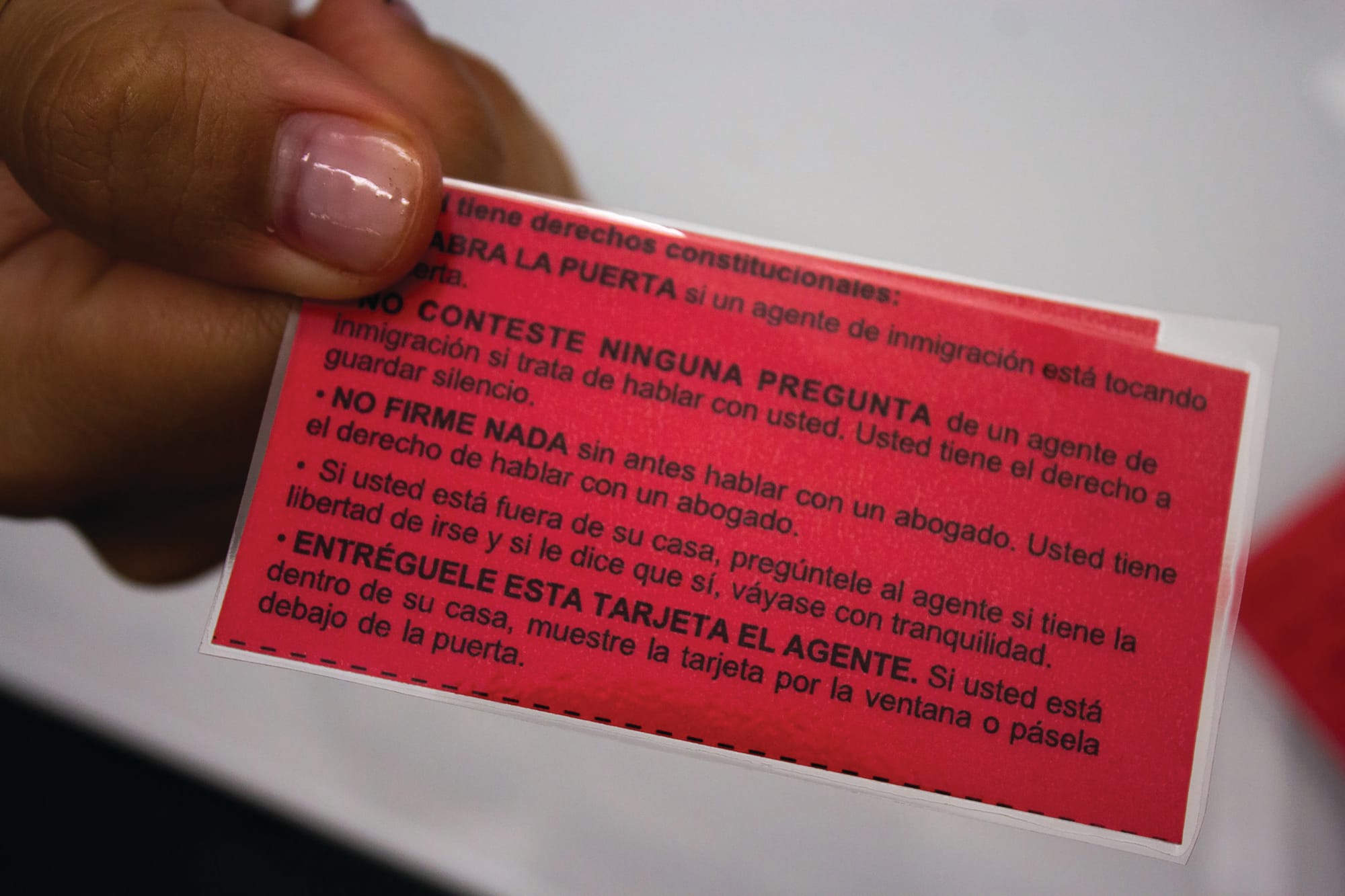
Editor’s note: The Guardsman woud like to remind the community that if approached by ICE, it is helpful to state that you will not speak without the advice of your attorney.
[pdf-embedder url="https://theguardsman.com/wp-content/uploads/2025/08/CCSF_Immigration_Enforcement_Flyer_OCEAN.pdf"]