City College radiology 2nd best in U.S.
Formerly a hospital transporter, Troy Scott is now a student in the best radiologic technologist training program this side of the Mississippi River.
By Matthew Gomez
The Guardsman
Formerly a hospital transporter, Troy Scott is now a student in the best radiologic technologist training program this side of the Mississippi River.
City College’s radiology program was rated second in the nation by auntminnie.com, a website considered to be the holy grail of radiology information. Johns Hopkins University in Baltimore took top honors.
“In our world it’s big,” Diane Garcia, clinical coordinator of the diagnostic medical imaging program, said of the award.
“We can use that recognition for a number of things,” said Kyle Thorton, program director and department chair of radiologic sciences. “It brings our students prestige.”
Scott worked at Kern Medical Center in Bakersfield, California as a transporter, moving patients around the hospital to get them to tests, X-rays and surgeries.
But the more he saw of the radiology department, the more he realized he needed to change careers.
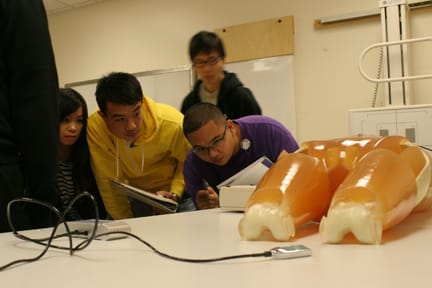
The winning combination of patient care, physics and rapid advances in technology inspired Scott to enroll in City College’s diagnostic medial imaging program, one of two programs offered by the radiology department.
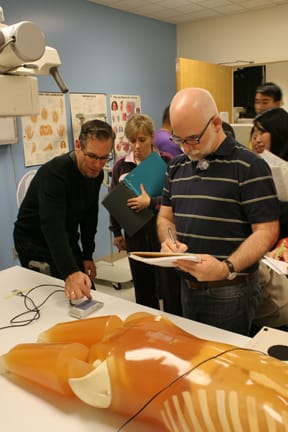
“I had a nice view of all the different departments,” Scott said. “Radiology was the one I enjoyed the most.”
The faculty is a key to the radiology program’s success. Many teachers, like Marilyn Rose, also work in hospitals. This helps keep them educationally updated, as well as knowing what students will experience when they enter the field.
“I have a more current knowledge of what actually goes on,” said Marilyn Rose, who works at Packard Children’s Hospital at Stanford when not teaching. “I’m able to give them real life examples.”
Such knowledge is important to third semester students like Scott, who must split their time between the classroom and the hospital.
He will be training at the VA Medical Center two days a week until summer, when he will work five days a week. The guidance his teachers have offered him is now being put to the test, but he isn’t nervous.
“They really set the bar high,” Scott said. “When you get to the hospital you’re ready to jump in and experience everything you’ve been taught.”