City College Iftar Celebrates Community and Honors Leaders: Breaking Fast and Breaking Bread
For the past two years, City College has hosted an Iftar celebration, honoring the Muslim student body and inviting anyone interested in participating in or learning more about Ramadan. From 6-9 p.m., people from all different religions, creeds and races filled a conference room at the front of the
By Finbar LaBelle
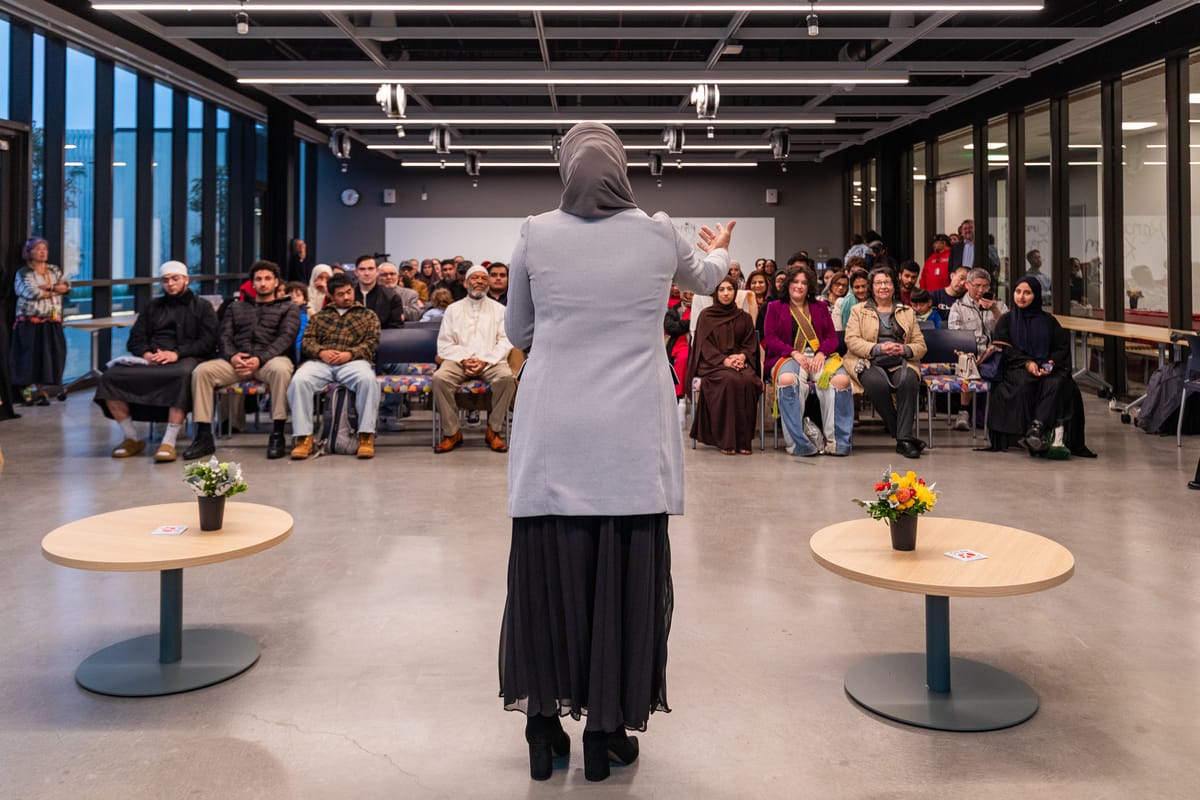
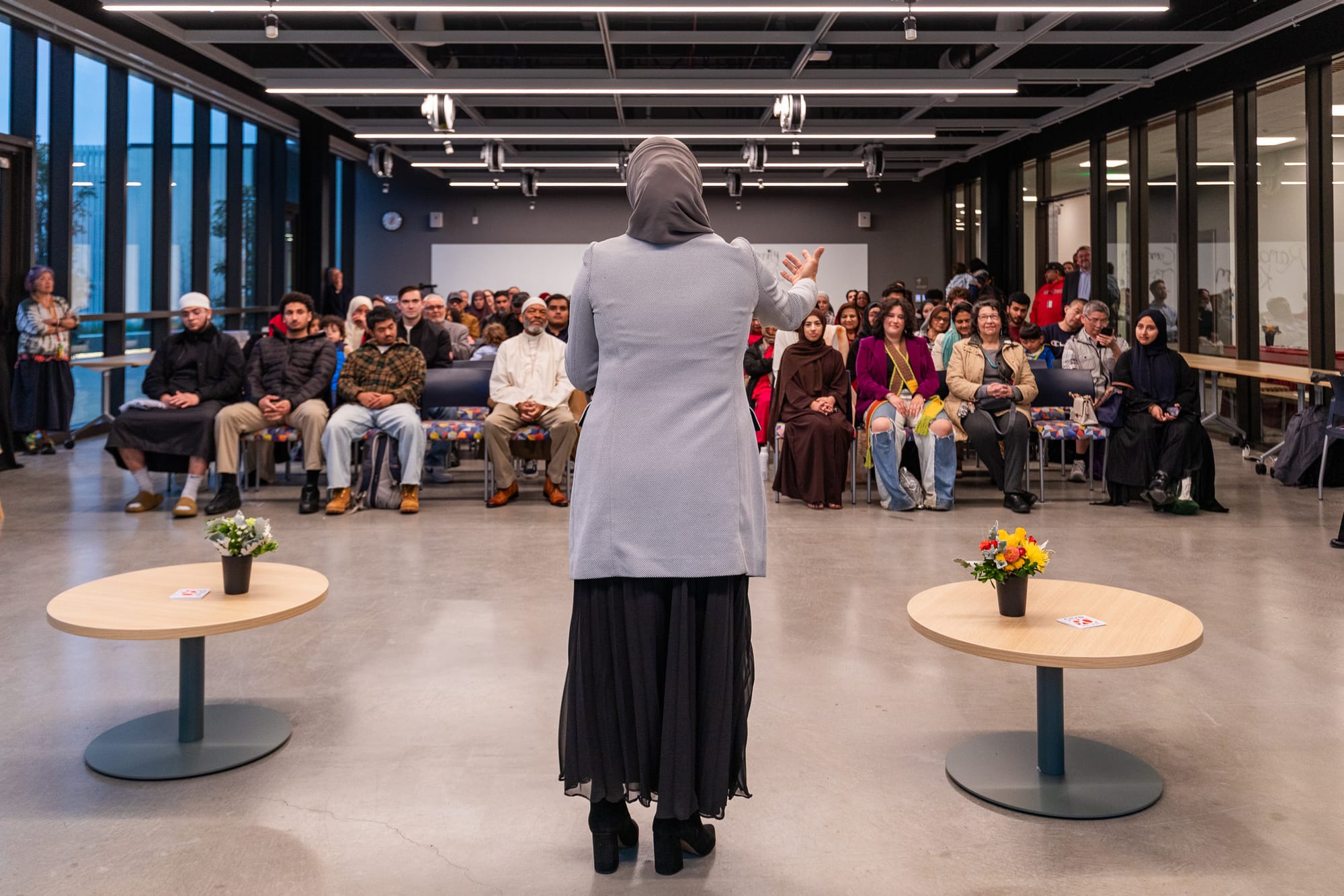
For the past two years, City College has hosted an Iftar celebration, honoring the Muslim student body and inviting anyone interested in participating in or learning more about Ramadan. From 6-9 p.m., people from all different religions, creeds and races filled a conference room at the front of the College’s new STEAM building, bringing their children and loved ones together for a night of awards, ceremony and delicious food.
For those unfamiliar, Ramadan is a holy month of fasting within the Islamic calendar wherein Muslims neither eat nor drink from sunrise to sunset. Two meals take place before dawn and after dusk. The first is called Suhoor, usually done before the dawn prayer, and then Iftar, which breaks the fast after the sun has fully set. The practice is a testament to Muslim faith and religiosity and is practiced to bring about a closeness to God.
However, this year, City College’s celebration was handled slightly differently. The event was overseen by the new Islamic Student Society Club, headed by President Heba Alsulaihi and Vice President Saeed Javed. The Iftar was also made possible thanks to Sagan Chowdhury, the society's events coordinator.
The Guardsman met with Maha and Faiza Nasher, the aunt and niece duo heading the ISOC’s social media, to discuss what the Iftar celebration meant to them.
Faiza spoke passionately when saying, “We used social media specifically to get the word out there so it wouldn’t just be about Muslims. We want people to experience what we do for Ramadan. Muslims are not viewed as good human beings in America, and we want to show everyone we can who Muslims actually are.”
The room quickly filled up before the night began. A separate space for prayer was lined with white prayer rugs, commonly referred to as Sajadah. All faced toward Mecca for Maghrib, one of five daily prayers. Maghrib takes place after sunset and literally translates to “the place where the sun sets.”
As an evening of religious observance, attendees were pleased to see the event unexpectedly blossom into a dual celebration. Alongside spiritual reflection, trustees, city officials, and current and former students were recognized with awards and certificates while people prepared to break their fast.
Chancellor Bailey began the night with reaffirming words, “Our Iftar event gets bigger and better every year. It is so amazing to see everyone in the community at a time when we need it so much.”
The speech was followed by other important figures in the community being awarded. Guest speaker Alma Soto, after greeting the crowd with Salam Alaikum, shared her story of finding Islam, all while attending City College:
“I am forever thankful for CCSF. I was born into a Catholic Mexican American family. I was not exposed to diverse communities until I came to City College. The first person I met was a Palestinian American. One day, she took me to the bathroom, removed her hijab, and told me about being Muslim. It was also through humanities courses here that I learned more about my religion. It opened up my eyes to engaging with life more. It was here, in the quad, that I heard the Quran for the first time. And it penetrated something in my soul. And I knew it was a calling.”
Soon after, Soto converted to begin her life as a Muslim.
Awards continued to be given out, including one for student trustee Heather Brandt and a certificate of recognition for the ISOC, all before the sun had finally set. Anyone could tell that those participating in Ramadan were ready to eat.
There was deliberation on what minute exactly the fast was to be broken, but believers and nonbelievers alike decided to wait until 7:27 to take their first bite.
Soon after the evening prayer, the room lit up with laughter, lively conversation, and lots of food.
Although the fast is typically broken with dates and water as in the tradition of the Prophet Mohammad, that night, there was an array of delicious traditional foods and desserts.
The evening's success was marked by a sense of community transcending religion while still beautifully illustrating the unifying nature of Islam.