Urban beekeepers sweeten life in the city
Last week the rains stopped, the sun came out, flowers began to bloom and urban beekeepers rejoiced – their honeybee colonies began to buzz after the winter months had kept them dormant, and thousands of bees flew out in search of pollen and nectar
By Brian Rinker
The Guardsman
Last week the rains stopped, the sun came out, flowers began to bloom and urban beekeepers rejoiced – their honeybee colonies began to buzz after the winter months had kept them dormant, and thousands of bees flew out in search of pollen and nectar.
Over the last five years, urban beekeeping has become a popular hobby for San Francisco residents. Hundreds of hives are now located throughout the city on rooftops, in backyards and at parks. The amount of bees in a colony can range from 4,000 to 80,000.
“The San Francisco urban setting is fantastic for bees,” said urban beekeeper Karen Peteros, who is also the former president of the San Francisco Beekeepers Association.
The Bay Area’s mild weather is an ideal setting for bees. Neighborhoods have varying micro-climates, which causes the honey from one neighborhood to taste different than honey from another. The honey from the warmer climate of the Mission will taste noticeably different than honey from a cooler climate like Glen Park, Peteros said.
“There are more bee clubs in the Bay Area than anywhere else,” Peteros said. When she joined the association in 2006 there were 60 members, and when she left in 2009 there were 205.
Urban beekeeping is a popular hobby because it’s relatively inexpensive, bees don’t take up much space and of course the payoff – honey.
Video of Liz Murray's rooftop bee hive
An urban beekeeper could get started with a hive and colony for around $200, Peteros said. She suggested someone interested in beekeeping should take a class first and then join a club. The clubs offer bee packages that include 10,000 bees and a queen, which comes in a little cage.
“Then the bees do all the work,” Peteros said.
Well, almost all of it. There is some maintenance required.
“People don’t understand how much work it is, and so they don’t do very well. Their bees swarm and swarms of bees freak people out,” Peteros said.
Swarming occurs naturally when a second queen is produced within a colony. The older queen takes flight with half the colony’s bees and searches for a new home. Bees normally make their hives in crevices, like a hollowed out tree trunk, but in urban settings the hives end up in buildings and other man-made structures. When bees swarm, they are not aggressive.
The growing trend of urban beekeeping didn’t pass over City College.
“We have bee hives here at City College,” said Steven Brown, chair of the environmental horticulture and floristry departments. “But they’re not doing very well.”
A few years ago, someone set up four bee hives on campus, but nobody knows who that person is or if they are still tending to the bees.
“He is neither a student nor a teacher,” said Liz Murray, horticulture student and urban beekeeper. “We have no idea who this person is, but he does have at least one active hive.”
City College would like to have their own bee hives, Murray said. She said there has been discussion of planting more bee-friendly flowers around campus, and that the honey would be used in the school restaurant and cafeteria.
“I would love to be the campus beekeeper,” Murray said. “Unfortunately it takes a lot of time to get the permission and the funding and to get all the logistics for having a bee hive ready in a school environment.”
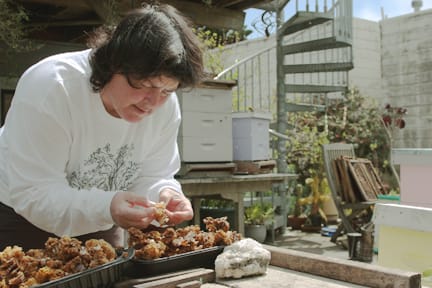
Murray runs a business, Sweet Thieves BeeKeeping, and normally has three bee hives on the roof of her town house in the Upper Haight. Surrounded by Buena Vista Park, Twin Peaks and Golden Gate Park, her bees have an ample supply of pollen and nectar.
Email:
brinker@theguardsman.com