Residents of San Francisco's Tenderloin Experience Growing COVID-19 Crisis
Pressure for city officials rises as inaction in dealing with homelessness in San Francisco’s Tenderloin district reaches heights of concern amid COVID-19 pandemic.

By Osvaldo SalazárOsalaza4@mail.ccsf.edu
Upon walking through San Francisco’s Tenderloin at any given time, any shelter in place guideline or social distancing protocol is almost impossible to follow for people in this neighborhood.
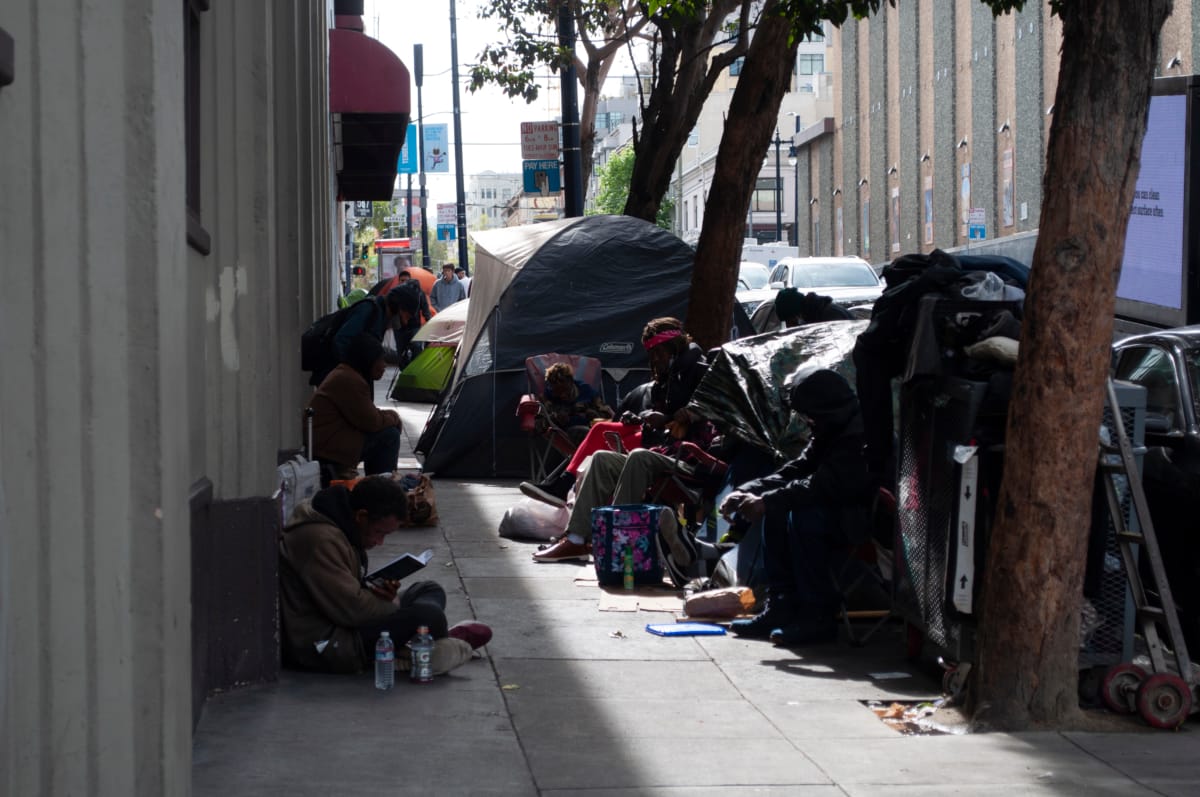
While residents of San Francisco brace themselves for an extension of the city’s shelter in place order, those who live in the Tenderloin brace themselves for at least another four weeks of these orders being essentially ignored. Those in the neighborhood who are lucky to have housing are following the sheltering guidelines, but those who do not have access to safe housing have continued to pack and congest neighborhood streets and sidewalks which has virtually eliminated any chance of social distancing.
While protections and guidelines set by the Centers for Disease Control and Prevention (CDC) and local health officials are followed without much difficulty in wealthier neighborhoods in the city, the risks just continue to grow for the over 20,000 residents of the Tenderloin district who are unable to leave their small urban dwellings. Simply leaving their homes to buy groceries, get exercise or even get fresh air puts their lives in direct danger.
“I really don’t like having to be out here right now, it's not safe at all, but I ran out of groceries so I just came to get what I needed and am going right back to my apartment. I hope I don’t run into too many people on the street on my way back,” said Tenderloin resident Lydia Bernal, 28. “There are just so many people outside all the time, the number of tents and homeless people I’ve seen lately in the neighborhood has also risen a lot, it’s worrying.”

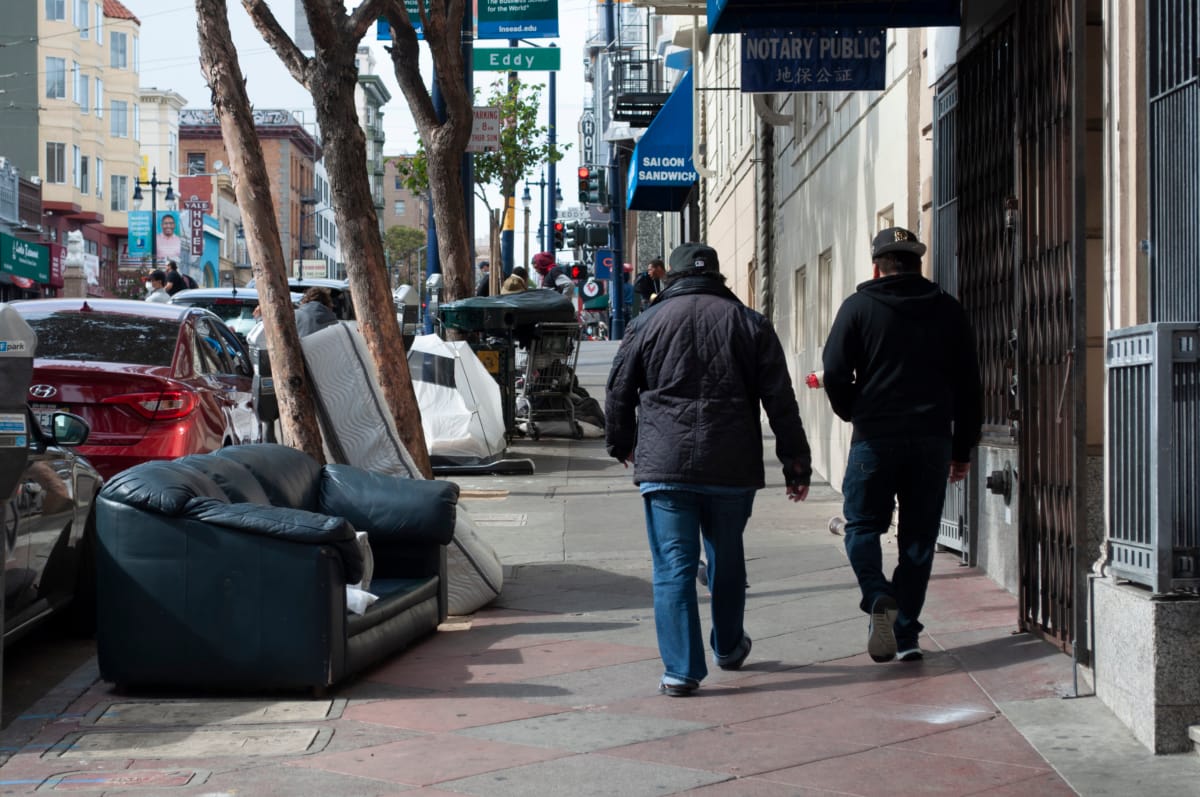
According to the CDC’s guidance for COVID-19, city officials should “encourage people staying in encampments to set up their tents/sleeping quarters with at least 12 feet x 12 feet of space per individual.” As of May 1, 391 tents lined the streets of one of the city’s densest neighborhoods which has increased exponentially from 149 in early March.
CDC guidelines also require that cities provide sufficient handwashing stations and portable toilets for encampments of 10 people or more. Currently, five such stations exist in the neighborhood, not nearly a sufficient amount for the almost 300% spike in encampments currently saturating the Tenderloin.
Aware of the violation of national and local social distancing guidelines, city supervisors pushed through emergency legislation on April 14 that would require over 8,000 empty hotel rooms be used to house the city’s homeless residents. By the last week of April, only 2,500 rooms had been secured, and just over 1,000 people had been moved into them. Mayor London Breed has stated she can’t comply with the ordinance fully at this time because it isn’t “paired with reality.”
Amid a Lawsuit recently filed by the UC Hastings School of Law which is located in the Tenderloin, along with merchants and residents of the neighborhood, Breed’s office has released their “Tenderloin Neighborhood Plan for Covid-19”. This 32 page plan offers safer sleeping conditions to those in encampments, expands hygiene stations for unhoused residents, and ensures housed residents have safe passage and access to their homes to safely practice socially distancing.
In an article by the San Francisco Chronicle, UC Hastings’ Chancellor and Dean David Faigman called the plan “entirely inadequate”, further stating it would only encourage more camping in the neighborhood. “The plan is just more talk. We need action, not talk. We need the tents and the drug dealers removed and the unhoused moved to safe and temporary housing, such as large tents or other shelter, until a permanent solution is accomplished.”